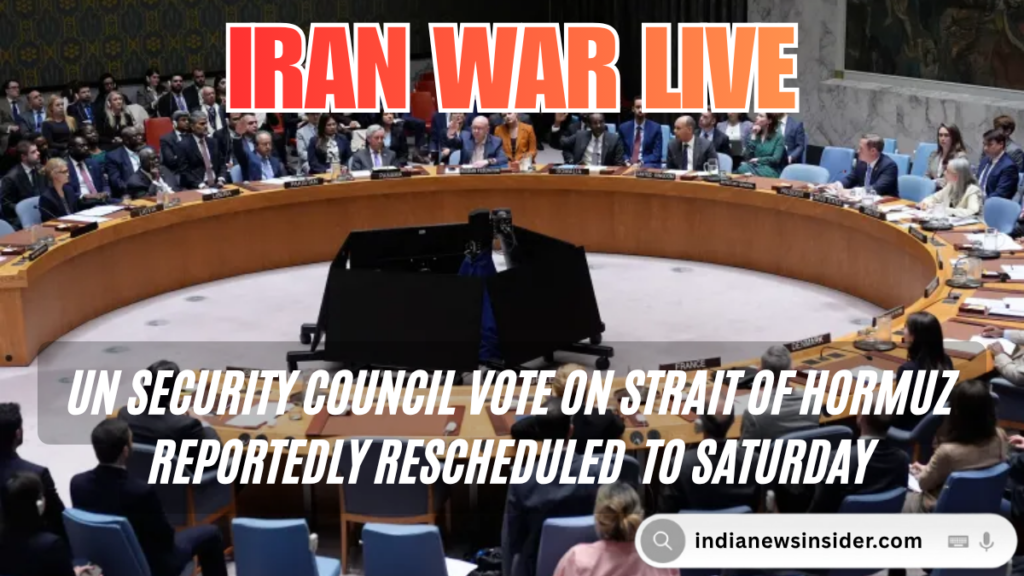
The highly anticipated UN Security Council vote concerning the safety of shipping in the vital Strait of Hormuz has reportedly been rescheduled from Friday to Saturday. This crucial deliberation by the council’s 15 member states addresses a Bahraini proposal aimed at safeguarding commercial vessels navigating one of the world’s most critical maritime choke points. The rescheduling underscores the complex diplomatic landscape surrounding international efforts to ensure stability in a region vital for global energy supplies.
Join our social media platform
The Critical Vote: Ensuring Safety in the Strait of Hormuz
The UN Security Council’s impending vote centres on a resolution designed to enhance the security of commercial shipping through the Strait of Hormuz. This strategic waterway is indispensable to the global economy, facilitating the transit of approximately one-fifth of the world’s oil and natural gas supplies. Its security is therefore a paramount concern for numerous nations, given its direct impact on international energy markets and economic stability.
Bahrain’s Resolution and Global Stakes
Bahrain, a key regional player, has put forth the resolution, seeking to establish a framework for protecting maritime traffic in the Strait. The initiative comes amidst heightened regional tensions and a series of incidents that have raised alarms about the safety of navigation. The proposed measures aim to provide a robust response to threats, ensuring the continuous flow of energy resources and preventing disruptions that could have far-reaching global consequences.
Draft Resolution Details and Contentions
Reports from major news agencies, including The Associated Press and Reuters, indicate that a draft version of the resolution contains a significant clause. This text reportedly authorizes member countries “to use all defensive means necessary” to protect commercial shipping within the Strait of Hormuz. This specific phrasing highlights the gravity of the perceived threats and the potential need for robust international action.
Authorizing “Defensive Means”
The inclusion of language permitting “defensive means” signifies a strong intent to empower nations to respond proactively to any aggression or threat against commercial vessels. While intended to deter hostile actions and ensure freedom of navigation, such provisions often become points of contention in international diplomacy, particularly when they involve the potential for military engagement. The UN Security Council vote on Strait of Hormuz hinges significantly on this aspect.
China’s Stance and Veto Power
Despite the urgent need for a resolution, the proposal faces a significant hurdle: the strong opposition from China. As a permanent, veto-wielding member of the UN Security Council, China has explicitly stated its disapproval of any resolution that incorporates provisions for the use of force. This stance significantly diminishes the likelihood of the Bahraini resolution passing, as China’s veto would effectively block its adoption. The diplomatic deadlock underscores the divergent views among permanent members regarding the appropriate response to security challenges in critical international waterways.
Implications and Geopolitical Landscape
The outcome of the UN Security Council vote on Strait of Hormuz carries significant geopolitical implications. A failure to pass a resolution could be perceived as an inability of the international community to collectively address security threats in a vital global artery, potentially encouraging further instability. Conversely, any resolution, even if modified, would set a precedent for future responses to maritime security challenges. The diplomatic maneuvering surrounding this vote reflects broader power dynamics and differing national interests concerning regional security and international law.

Conclusion
The rescheduling of the UN Security Council vote on the Strait of Hormuz resolution to Saturday underscores the delicate and complex nature of international efforts to secure this paramount waterway. With Bahrain’s proposal facing strong opposition from China over the “use of force” clause, the path to a consensus remains challenging. The world watches as the Security Council grapples with ensuring the safety of global shipping and maintaining stability in a region critical to the world’s energy supply.
Read More
- NDTV India is Hindi News Website. Read Hindi News, Latest Hindi News, Today Hindi News, Breaking Hindi News, Hindi Samachar
- Today’s news: Get latest and Breaking News on Politics, Business, Lifestyle, Entertainment and Sports along with News updates from around the world.
- Read the Latest News Updates online related to India, World and US business and economy.
- Times of India: News – Breaking News, Latest News, India.
- ભારતની તમામ નવી સરકારી યોજનાઓ 2026 વિશે માહિતી