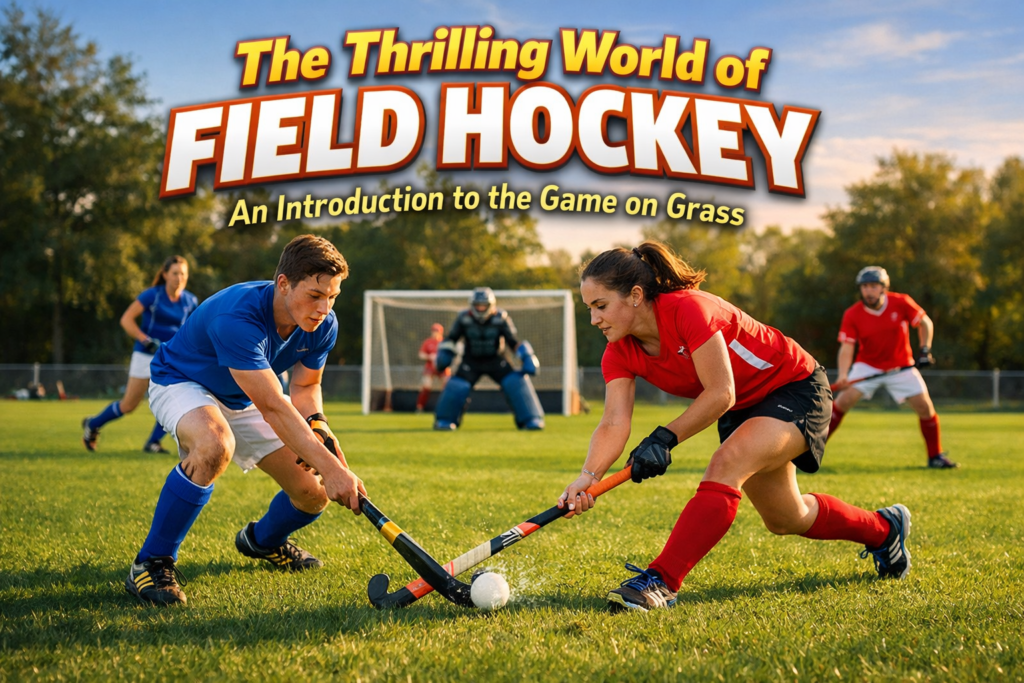
Welcome to the exciting realm of field hockey! For many, the word “hockey” immediately conjures images of ice, skates, and fast-paced action in a rink. However, a vibrant and equally dynamic sport thrives on grass, artificial turf, and even indoor courts across the globe: Field Hockey. This ancient game, played with sticks and a ball, combines athleticism, precision, strategy, and teamwork, captivating millions of players and fans worldwide. If you’ve ever been curious about this engaging sport, or are looking for your next athletic passion, you’ve come to the right place. This introductory guide will delve into everything you need to know about field hockey, from its rich history and fundamental rules to the equipment, skills, and strategic nuances that make it such a beloved game.
What is Field Hockey?
Field hockey is a team sport played between two teams of eleven players each, using sticks to hit a small, hard ball into the opponent’s goal. The objective is simple: score more goals than your opponent within the allotted playing time. While similar in concept to ice hockey, field hockey distinguishes itself with its unique set of rules, equipment, and playing surface, demanding a different blend of skills and strategies. It’s a non-contact sport, emphasizing skill, agility, and tactical play over brute force.
A Global Sport
Field hockey is truly a global phenomenon. It is particularly popular in Europe (especially the Netherlands, Germany, Belgium, and Great Britain), Australia, New Zealand, India, Pakistan, Argentina, South Africa, and parts of North America. It is a prominent Olympic sport, featured in both men’s and women’s competitions, showcasing the highest level of skill and competition every four years. Its widespread appeal is a testament to its dynamic nature and universal rules.
Key Characteristics
At its core, field hockey is characterized by its continuous flow of play, rapid transitions between offense and defense, and the intricate stickwork required to control the ball. Players use the flat side of their J-shaped sticks to dribble, pass, and shoot the ball, navigating the field with speed and precision. The game demands excellent hand-eye coordination, aerobic fitness, and strategic thinking, making it a comprehensive test of athletic ability.
A Rich History: From Ancient Roots to Modern Game
The roots of stick-and-ball games can be traced back thousands of years, with various forms played by ancient civilizations around the world. These early iterations laid the groundwork for many modern sports, including field hockey.
Early Origins
Evidence suggests that games resembling field hockey were played in ancient Egypt, Persia, and Greece. Wall carvings in Egypt dating back to 2000 BC depict men with sticks and a ball. Similar games were known in ancient China and among indigenous American tribes. These early forms were often part of religious ceremonies or recreational activities, showcasing the enduring human fascination with stick-and-ball contests.
The Birth of Modern Field Hockey
The modern game of field hockey, as we recognize it today, began to take shape in 19th-century England. The first field hockey club, Blackheath Hockey Club, was founded in London in 1861. Following this, the Hockey Association was formed in 1886, establishing a standardized set of rules that helped popularize the sport across Great Britain and its colonies. This period marked a significant shift from informal pastimes to an organized, codified sport.
Evolution and International Growth
Field hockey quickly spread globally through the British Empire. India and Pakistan, in particular, embraced the sport, developing their own unique, highly skilled styles of play that dominated international competitions for decades. The sport was first introduced to the Olympic Games in 1908 in London and has been a fixture ever since, with women’s field hockey making its Olympic debut in 1980. The International Hockey Federation (FIH) was founded in 1924, becoming the global governing body responsible for organizing international tournaments, including the World Cup and Olympic qualifiers, and continually evolving the rules to enhance the game’s excitement and fairness.
Understanding the Game: Rules and Objectives
To truly appreciate field hockey, it’s essential to grasp its fundamental rules and objectives. While some aspects can seem complex at first, the core principles are straightforward and designed to promote skillful, fast-paced play.
The Pitch and Players
Field hockey is played on a rectangular pitch, typically 91.4 meters (100 yards) long and 55 meters (60 yards) wide. The pitch is marked with a halfway line, 23-meter lines, and a crucial D-shaped shooting circle (or “D”) around each goal. Goals are 3.66 meters (12 feet) wide and 2.14 meters (7 feet) high. Each team consists of 11 players on the field at one time: 1 goalkeeper and 10 outfield players. Substitutions are flying and unlimited, allowing teams to maintain high energy levels throughout the game.
The Objective: Scoring Goals
The primary objective is to score a goal by hitting or pushing the ball into the opponent’s goal. A goal is only valid if the ball is struck from within the attacking team’s shooting circle. This rule adds a strategic element, as teams must work the ball into a dangerous area before attempting to score. Matches are divided into four quarters, usually 15 minutes each, with a short break between quarters and a longer halftime break.
Key Rules and Fouls
Field hockey is a non-contact sport, and physical fouls are strictly penalized. Here are some of the most important rules:
- No Feet (or other body parts): Outfield players are not allowed to intentionally use their feet or any other part of their body to control, stop, or propel the ball. This is a fundamental rule that ensures the game remains a stick-and-ball sport.
- Flat Side of the Stick Only: Players can only use the flat side of their stick to play the ball. The rounded side is never permitted for striking the ball.
- Obstruction: Players cannot position themselves between an opponent and the ball to prevent the opponent from playing it, unless they are actively playing the ball themselves. This prevents players from blocking access to the ball without attempting to gain possession.
- Third-Party Obstruction: A player cannot use another player (teammate or opponent) to gain an advantage in obstructing an opponent.
- High Ball/Dangerous Play: The ball cannot be raised dangerously, especially near other players. While certain aerial passes are allowed under specific conditions, safety is paramount.
- Backstick: Hitting the ball with the back of the stick is a foul.
Penalties for fouls vary depending on their severity and location, ranging from a free hit for the opposing team to more serious set pieces like penalty corners and penalty strokes.
Set Pieces: Penalty Corners and Penalty Strokes
- Penalty Corner: Awarded for fouls committed by the defending team inside their shooting circle, or for intentional fouls committed outside the circle but within the 23-meter area. During a penalty corner, the attacking team has a strategic advantage: one attacker pushes the ball from the baseline to teammates waiting at the top of the circle, while only five defenders (including the goalkeeper) are allowed to defend the goal. The remaining defenders must wait behind the halfway line. This creates an intense, fast-paced scoring opportunity.
- Penalty Stroke: The most severe penalty, awarded for fouls that prevent a probable goal or for deliberate fouls by a defender within the circle. A penalty stroke involves one attacker taking a direct shot at the goal from a spot 6.4 meters (7 yards) out, with only the goalkeeper to beat.
The Essential Gear: What You Need to Play
Field hockey requires specific equipment designed for safety and optimal performance. While some items are mandatory, others are highly recommended.
The Field Hockey Stick
The most crucial piece of equipment is the field hockey stick. Modern sticks are typically made from composite materials like fiberglass, carbon fiber, and aramid, offering a balance of power, feel, and durability. Sticks come in various lengths and weights to suit individual players’ heights, positions, and preferences. The stick has a curved head (the “hook”) and a flat playing surface on one side.
The Ball
The field hockey ball is hard, spherical, and typically made of plastic, sometimes with a cork core. It has a circumference of 224-235mm and weighs between 156-163 grams. For outdoor play, the ball is usually smooth, while indoor balls may be dimpled to reduce skidding on hard surfaces.
Protective Gear
Safety is paramount in field hockey, and protective gear is essential:
- Shin Guards: Mandatory for all players, shin guards protect the lower legs from impacts with sticks and the ball.
- Mouthguard: Highly recommended, if not mandatory, a mouthguard protects teeth, gums, and the jaw from potential injuries.
- Gloves: Some outfield players wear padded gloves, especially on their left hand, for added protection against stick and ball impacts.
- Goalkeeping Gear: Goalkeepers wear extensive protective gear, including a helmet with a face mask, chest protector, padded shorts, leg guards, kickers (foot protectors), and heavily padded gloves. This gear is designed to withstand high-speed shots and protect the most exposed player on the field.
Footwear and Apparel
Players typically wear athletic clothing suitable for running and agility. Footwear is crucial:
- Outdoor: Cleats or turf shoes with good grip are necessary for playing on grass or artificial turf, providing stability and traction.
- Indoor: Indoor court shoes are used for indoor field hockey, offering grip on smooth surfaces.
Mastering the Fundamentals: Basic Skills for Beginners
Field hockey is a skill-intensive sport. Developing a strong foundation in basic techniques is crucial for enjoyment and success.
The Grip
A proper grip is the starting point for all stickwork. The left hand holds the top of the stick (the “handle”) like shaking hands, while the right hand holds lower down, allowing for control and power. This grip allows for fluid movement of the stick and ball.
Dribbling
Dribbling is the art of moving the ball while maintaining control.
- Push Dribble: Keeping the ball close to the stick, pushing it forward with light touches.
- Indian Dribble (or Reverse Stick Dribble): A more advanced technique where the player rotates the stick to use both the flat and reverse flat side to move the ball from side to side, often used to beat defenders or change direction quickly.
Passing
Effective passing is key to team play and moving the ball up the field.
- Push Pass: A short, accurate pass where the stick is pushed directly through the ball. Ideal for close-range passing and setting up shots.
- Slap Pass: A more powerful pass, involving a short backswing and a firm “slap” at the ball.
- Hit: The most powerful pass, involving a full backswing and a forceful strike. Used for long distances or powerful shots on goal.
Receiving
Receiving the ball cleanly is as important as passing. Players use their stick to cushion the ball, bringing it under immediate control, often by “giving” with the stick as the ball makes contact.
Tackling
Defensive players employ various tackling techniques to dispossess opponents.
- Jab Tackle: A quick poke at the ball with the stick, aiming to dislodge it from the opponent’s control.
- Block Tackle: Placing the stick firmly on the ground in the path of the ball to block its progress.
Shooting
The ultimate goal of attacking play is to score. Shooting techniques often involve powerful hits, slaps, or deflections aimed at the goal. Accuracy, power, and quick release are vital.
Strategies and Positions: Teamwork on the Field
Field hockey is a highly strategic game, where teamwork and tactical formations are crucial for success. Each player has a specific role, contributing to both offense and defense.
Player Positions
While specific roles can vary, the traditional outfield positions are:
- Forwards (Strikers/Attackers): Primarily responsible for attacking play, dribbling into the circle, and scoring goals. They often play high up the pitch.
- Midfielders (Halfbacks): The engine room of the team, linking defense and attack. They cover a lot of ground, supporting defensive efforts, distributing the ball, and joining the attack.
- Defenders (Fullbacks): The last line of defense before the goalkeeper. Their main role is to prevent opponents from scoring, clear the ball from dangerous areas, and initiate attacks from the back.
- Goalkeeper: The specialized player whose sole job is to guard the goal, using extensive protective gear to stop shots.
Basic Formations
Teams use various formations (e.g., 4-3-3, 3-5-2) to optimize their balance between attack and defense, depending on their strengths and the opponent’s strategy. These formations dictate how players are positioned and how they move as a unit.
Offensive and Defensive Play
- Offense: Focuses on maintaining possession, creating space, making accurate passes, and getting the ball into the shooting circle for scoring opportunities.
- Defense: Involves marking opponents, intercepting passes, tackling effectively, and clearing the ball out of dangerous areas. Teams often employ zonal marking or man-to-man marking strategies.
Why Play Field Hockey? Benefits and Appeal
Beyond the thrill of competition, field hockey offers a multitude of benefits for players of all ages and skill levels.
Physical Fitness
Field hockey is an incredibly demanding sport that provides a full-body workout. Players constantly run, sprint, change direction, and use core strength for stickwork. This leads to improved cardiovascular endurance, agility, speed, strength, and hand-eye coordination.
Mental Acuity and Strategy
The game requires constant strategic thinking, quick decision-making, and anticipation. Players must read the game, communicate with teammates, and adapt to changing situations, enhancing mental sharpness and problem-solving skills.
Teamwork and Social Skills
As a team sport, field hockey fosters collaboration, communication, and mutual support. Players learn to work together towards a common goal, build camaraderie, and develop essential social skills.
Inclusivity and Accessibility
Field hockey is played by people of all ages, genders, and backgrounds. Many clubs and leagues cater to various skill levels, from recreational to elite, making it an accessible sport for anyone interested in picking up a stick.
Getting Started: Your First Steps into Field Hockey
Inspired to try field hockey? Getting started is easier than you might think.
Finding a Club or Team
The best way to get involved is to find a local field hockey club or school team. Most clubs offer introductory programs or “taster” sessions for beginners. Websites like the FIH (International Hockey Federation) or your national/regional hockey association can help you locate clubs in your area.
Essential Starter Gear
For your first few sessions, you might be able to borrow a stick. However, if you decide to commit, investing in your own gear is worthwhile:
- Stick: Choose a stick appropriate for your height.
- Shin Guards: Non-negotiable for safety.
- Mouthguard: Highly recommended.
- Appropriate Footwear: Turf shoes or cleats for outdoor play.
Learning the Ropes
Don’t be intimidated by the fast pace or complex rules. Most clubs have coaches dedicated to teaching beginners. Focus on mastering the basic grip, dribbling, passing, and receiving. Practice regularly, watch games, and learn from more experienced players. The field hockey community is generally welcoming and supportive.
The Future of Field Hockey
Field hockey continues to evolve, with rule changes designed to make the game faster, more exciting, and more spectator-friendly. The development of artificial turf pitches has revolutionized the game, allowing for consistent ball speed and intricate stickwork.
International Competitions
The sport boasts a rich calendar of international events, including the FIH Pro League, the Hockey World Cup, and the Olympic Games. These tournaments showcase the pinnacle of field hockey talent and continue to inspire new generations of players.
Growth and Development
With initiatives focused on youth development, indoor hockey, and various formats like Hockey5s, the sport is actively working to increase its global reach and appeal. The emphasis on skill, speed, and strategic play ensures that field hockey will remain a captivating and rewarding sport for years to come.
Embrace the Excitement of Field Hockey
Field hockey is more than just a game; it’s a vibrant community, a physically demanding challenge, and a mentally stimulating pursuit. Whether you’re drawn to its rich history, its intricate skills, or its fast-paced team dynamics, there’s a place for you on the field. So, grab a stick, find a ball, and step onto the pitch – the thrilling world of field hockey awaits!
Read More
- NDTV India is Hindi News Website. Read Hindi News, Latest Hindi News, Today Hindi News, Breaking Hindi News, Hindi Samachar
- Today’s news: Get latest and Breaking News on Politics, Business, Lifestyle, Entertainment and Sports along with News updates from around the world.
- Read the Latest News Updates online related to India, World and US business and economy.
- Times of India: News – Breaking News, Latest News, India.
- ભારતની તમામ નવી સરકારી યોજનાઓ 2026 વિશે માહિતી