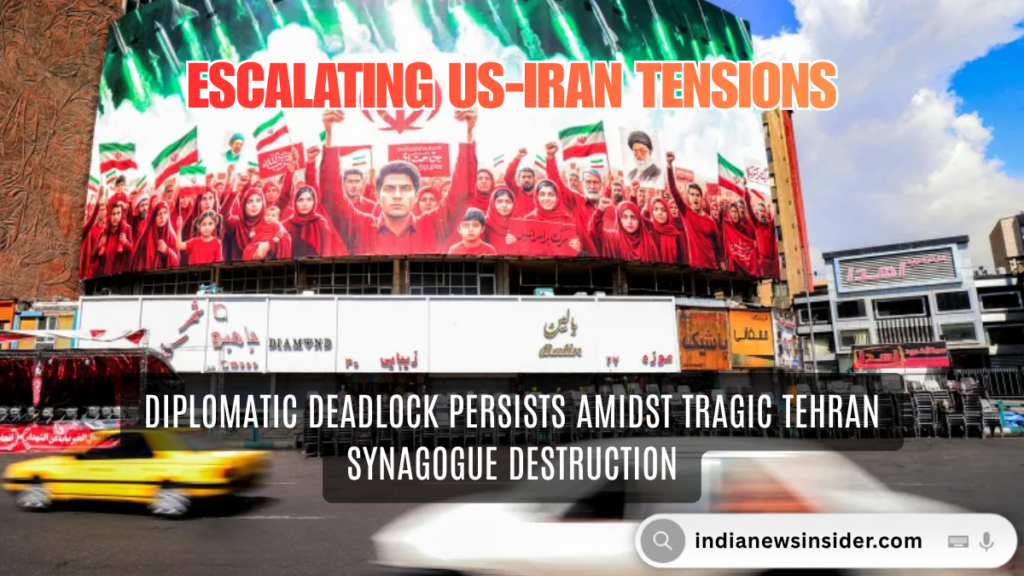
The geopolitical landscape of the Middle East remains fraught with peril, characterized by a profound and escalating US-Iran tensions that show little sign of abatement. Despite persistent international calls for de-escalation and intermittent diplomatic overtures, Washington and Tehran find themselves entrenched in positions that are, by all accounts, “poles apart.”
Join our social media platform
This article delves into the intricate web of diplomatic stalemate, the profound distrust hindering direct engagement, and the unsettling reality of physical conflict, tragically underscored by the recent destruction of a synagogue in Tehran following a reported US-Israeli strike.
The Chasm of Diplomacy: US-Iran Standoff Deepens
For years, the refrain from Tehran has been unequivocal: direct negotiations with the United States are off the table. This steadfast refusal is rooted in decades of mistrust, historical grievances, and a deeply ingrained suspicion of American intentions.
From the 1953 coup to the 1979 revolution and subsequent sanctions, Iranian leaders view direct talks as a surrender of leverage, a legitimization of perceived hostile policies, or a trap designed to undermine their sovereignty. This stance is not merely rhetoric; it forms a cornerstone of Iranian foreign policy, shaping its engagement with the international community.
However, the absence of direct dialogue does not equate to a complete disengagement from diplomacy. Paradoxically, while shunning Washington, Tehran has actively pursued diplomatic avenues across the globe. Iranian Foreign Minister Abbas Araghchi, a seasoned diplomat, has reportedly engaged in numerous phone conversations with his counterparts in the region and beyond.
These discussions are often framed as attempts to de-escalate regional tensions, build alliances, or garner support for Iran’s positions on various issues, including its nuclear program and sanctions relief. Such indirect engagement, often mediated by third parties, represents a cautious strategy to navigate the complex international arena without directly confronting the adversary it so vehemently distrusts.
Yet, despite these behind-the-scenes efforts, the public rhetoric from both Washington and Tehran remains sharply confrontational. There is a discernible lack of conciliatory language, a clear absence of signals that would indicate a willingness to bridge the vast ideological and strategic divide. Each side frequently accuses the other of aggression, destabilization, and bad faith.
This rhetorical deadlock often overshadows any nascent diplomatic initiatives, contributing to a cycle of suspicion and hardening positions. The fundamental issues – Iran’s nuclear ambitions, its regional proxy networks, human rights concerns, and the crippling US sanctions – remain unresolved, fueling the persistent escalating US-Iran tensions.
Navigating the Indirect Channels: A Glimmer of Hope?
The concept of indirect diplomacy, while challenging, is not without precedent in US-Iran relations. In the past, intermediaries have played crucial roles in facilitating prisoner exchanges or even laying groundwork for broader agreements. Today, countries like Pakistan are reportedly mediating proposals between the two adversaries.
These proposals, though shrouded in secrecy, likely touch upon specific points of contention, perhaps related to de-escalation in certain regional conflicts, specific aspects of the nuclear program, or even humanitarian issues.
The preference for indirect talks from Iran’s perspective is clear: it allows them to explore potential solutions without appearing to capitulate to US pressure. It also provides a buffer, allowing for deniability if talks fail and maintaining a strong anti-American posture domestically. For the US, engaging indirectly might be a pragmatic acknowledgement of Iran’s political realities, offering a pathway to managing the conflict even if direct engagement is impossible.
However, the efficacy of indirect diplomacy is often constrained by its very nature. Messages can be misinterpreted, intentions can be obscured, and the absence of direct communication can lead to slower progress and less comprehensive agreements. The “two proposals” mentioned in the brief, mediated by Pakistan, signify a recognition by both sides that some form of communication is necessary to prevent outright conflict.
Yet, the fact that they remain “poles apart” suggests that these proposals likely fall short of addressing the core demands of either party, leaving the diplomatic horizon distant and hazy. The profound mistrust continues to be a formidable barrier, ensuring that any progress achieved through these channels is incremental and fragile, constantly threatened by the underlying escalating US-Iran tensions.
A Devastating Strike: The Destruction of a Tehran Synagogue
Against this backdrop of diplomatic inertia, the specter of military action looms large. Earlier reports confirmed a deeply unsettling development: the destruction of a synagogue in Tehran following what was described as a US-Israeli strike. This incident marks a significant and dangerous escalation, bringing the physical manifestations of the conflict directly into civilian areas within Iran’s capital.
According to Iran’s semi-official Mehr news agency, a residential building in central Tehran was the primary target of one of the latest strikes. Tragically, a synagogue adjacent to this residential building was also destroyed.
The report meticulously detailed the extent of the collateral damage, noting that due to the narrowness of the streets surrounding the targeted building, the exterior and interior of nearby structures suffered “severe damage.” This account paints a grim picture of urban warfare, where precision strikes in dense residential areas carry an inherent risk of unintended destruction and civilian casualties.
While there was no immediate report on casualties, the very nature of the destruction, particularly in a residential zone, raises serious concerns about civilian safety. A separate video published by the English-language Iranian news channel Press TV offered a visual testament to the devastation, showing rescue workers sifting through mangled rubble, a stark reminder of the human cost of such military actions.
This incident injects a new, alarming dimension into the already escalating US-Iran tensions, moving beyond proxy conflicts to direct strikes within Iranian territory.
Unveiling the Target: Implications of the Attack
The targeting of a residential building, and the subsequent destruction of a synagogue, carries significant implications. While the specific intent behind targeting that particular residential building remains unclear, the collateral damage to a place of worship for a minority community is particularly sensitive.
Such incidents inevitably draw international condemnation and raise questions about adherence to international humanitarian law, which mandates the protection of civilians and civilian infrastructure during armed conflict.
The symbolic significance of a synagogue being destroyed cannot be overstated. It risks being interpreted as an attack on Iran’s Jewish community, regardless of the actual intent. This could potentially inflame inter-communal tensions or be exploited by extremist elements. For a country like Iran, which prides itself on the historical presence and constitutional protection of its Jewish minority, such an incident creates a complex narrative challenge.
From a geopolitical perspective, this strike, if indeed a US-Israeli operation, signals an aggressive posture, indicating a willingness to take direct action within Iran’s borders. This raises the probability of Iranian retaliation, potentially through its proxy networks in the region or through direct action against US or Israeli interests.
The cycle of provocation and retaliation, already a dangerous feature of the region, risks intensifying further, pushing the already escalating US-Iran tensions closer to an all-out confrontation.
Iran’s Jewish Community: A Legacy Under Threat
The destruction of the Tehran synagogue casts a harsh light on the unique position of Iran’s ancient Jewish community. Jewish people have a continuous presence in Iran dating back thousands of years, predating Islam. This long history has seen periods of both tolerance and persecution, but the community has largely endured, maintaining its cultural and religious identity. Today, an estimated 20,000 Jews still reside in Iran, making it one of the largest Jewish communities in the Middle East outside of Israel.
The Iranian constitution even reserves one seat in the Majlis (parliament) for a Jewish representative, a symbol of the official recognition of their minority status. Despite this, the community faces numerous challenges, including societal discrimination, economic pressures, and the complex political reality of living in a country that views Israel as its arch-enemy.
Members of the community often find themselves navigating a delicate balance, committed to their Iranian identity while maintaining their religious heritage.
The destruction of a synagogue, irrespective of whether it was the primary target, is a deeply distressing event for this community. It represents not just the loss of a physical structure but also a psychological blow, potentially fueling fears and anxieties about their safety and future in Iran.
It underscores how geopolitical conflicts can have profound and often unintended consequences on vulnerable minority groups, further complicating the already volatile situation and adding another layer of concern to the escalating US-Iran tensions.
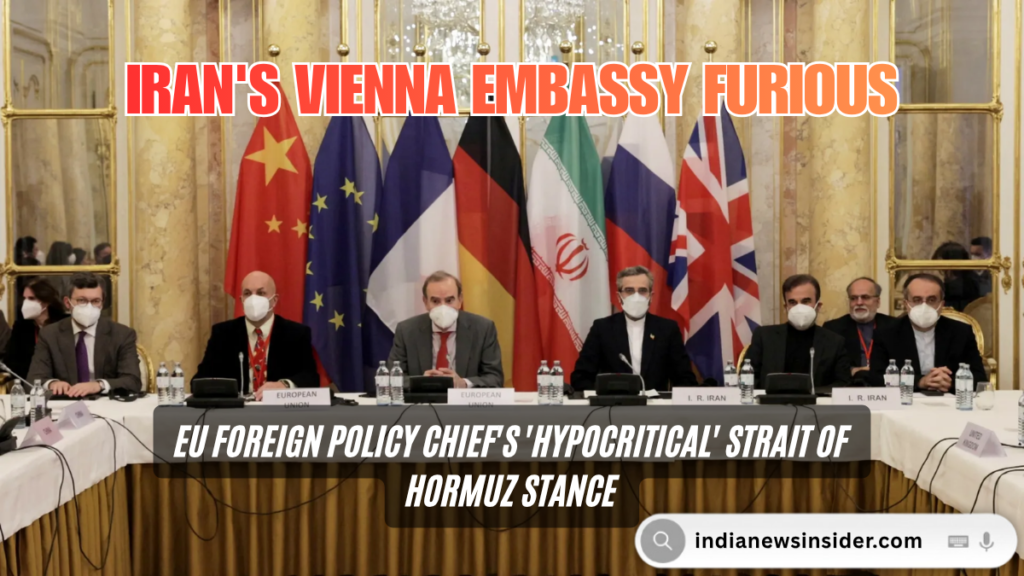
The Broader Geopolitical Landscape Amidst Escalating US-Iran Tensions
The direct strike in Tehran and the persistent diplomatic deadlock are symptoms of a much broader, deeply entrenched geopolitical rivalry. The US and Iran are locked in a struggle for influence across the Middle East, a contest that plays out in proxy conflicts in Yemen, Syria, Iraq, and Lebanon. Each side views the other’s regional activities as destabilizing and a threat to its own security interests.
The fate of the Joint Comprehensive Plan of Action (JCPOA), the 2015 nuclear deal, remains a central point of contention. The US withdrawal from the agreement in 2018 and the subsequent re-imposition of sanctions have severely crippled Iran’s economy and led Tehran to progressively scale back its commitments under the deal.
Efforts to revive the JCPOA have repeatedly stalled, with both sides demanding concessions from the other before returning to full compliance. This nuclear standoff is a primary driver of the escalating US-Iran tensions, constantly threatening to push the conflict into a more dangerous phase.
Beyond the immediate adversaries, global powers like Russia, China, and the European Union watch these developments with growing concern. Each has its own interests in regional stability, energy security, and non-proliferation. While some engage in mediating roles, their ability to meaningfully influence the deeply entrenched positions of Washington and Tehran is limited.
The economic sanctions imposed by the US continue to exert immense pressure on Iran, contributing to internal discontent and further hardening the regime’s stance against what it perceives as economic warfare. This complex interplay of internal and external pressures makes any resolution incredibly difficult.
Pathways to De-escalation: A Distant Horizon?
Given the current trajectory, pathways to genuine de-escalation appear distant. A fundamental shift in approach is required from both sides, rooted in a willingness to compromise and engage in substantive dialogue. For Iran, this might involve a reconsideration of its stance on direct talks, perhaps under specific conditions or with a clear agenda. For the US, it could necessitate a more nuanced approach to sanctions relief and a clearer articulation of its long-term goals beyond regime change.
Confidence-building measures, such as prisoner exchanges, humanitarian cooperation, or even limited military de-confliction protocols, could serve as initial steps to rebuild trust. The role of international pressure, particularly from a united front of global powers, could be crucial in pushing both sides towards a negotiated settlement. However, domestic political pressures on both sides – hardliners in Iran who benefit from confrontation and political polarization in the US – make such shifts incredibly difficult.
Conclusion
The narrative of escalating US-Iran tensions is one of profound division, where diplomatic efforts consistently clash with deeply rooted mistrust and the grim reality of military action. The recent destruction of a Tehran synagogue serves as a tragic reminder of the human cost and unintended consequences when geopolitical rivalries spill over into urban centers. Washington and Tehran remain “poles apart,” not just in their rhetoric but in their fundamental visions for the region and their approaches to international relations.
Without a dramatic shift in strategy, a willingness to engage directly and meaningfully, and a genuine commitment to de-escalation, the Middle East will continue to grapple with the ominous shadow of a conflict that shows no signs of abating, threatening regional stability and global peace.
Read More
- NDTV India is Hindi News Website. Read Hindi News, Latest Hindi News, Today Hindi News, Breaking Hindi News, Hindi Samachar
- Today’s news: Get latest and Breaking News on Politics, Business, Lifestyle, Entertainment and Sports along with News updates from around the world.
- Read the Latest News Updates online related to India, World and US business and economy.
- Times of India: News – Breaking News, Latest News, India.
- ભારતની તમામ નવી સરકારી યોજનાઓ 2026 વિશે માહિતી