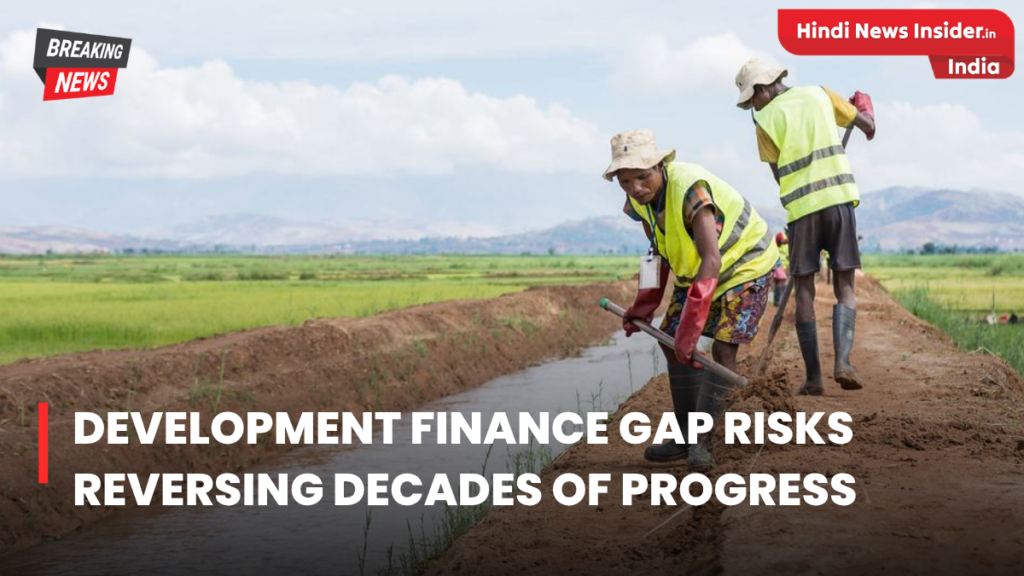
The global community faces a critical juncture, as a widening development finance gap threatens to undo decades of progress and derail the ambitious targets of the Sustainable Development Goals (SDGs). This stark warning comes from the 2026 Financing for Sustainable Development Report, which assesses progress on the Sevilla Commitment – a landmark 2025 agreement aimed at securing the $4 trillion needed annually to achieve the SDGs by the end of the decade.
Join our social media platform
“Implementing the Sevilla Commitment is our best chance to demonstrate the global community’s enduring commitment to cooperation and to unlock the finance needed to keep the promise of the Sustainable Development Goals,” UN Deputy Secretary-General Amina Mohammed stated ahead of the report’s launch, underscoring the urgency of collective action.
Read also: Secretary-General of ASEAN Attends Virtual AFMGM-IFIs Meeting
The Widening Financing Gap
Despite the monumental investment required to deliver the SDGs within the next four years, the report highlights a regrettable trend: the financing gap is expanding. UN Under-Secretary-General for Economic and Social Affairs (DESA) Li Junhua pointed out that development aid is sharply declining, even as developing countries – particularly the most vulnerable – grapple with escalating costs from environmental degradation and climate impacts, high capital costs, and mounting debt pressures.
Alarming Figures on Aid and Debt
The report’s findings paint a concerning picture. Official Development Assistance (ODA) experienced a significant drop of 6 per cent in 2024, followed by an even more drastic 23 per cent decrease the subsequent year. Concurrently, the burden of debt servicing has soared, reaching 20-year highs, further restricting the fiscal space available for crucial development investments.
Threats to Multilateralism and Global Trade
Beyond financial shortfalls, the very fabric of global cooperation is under strain. “Multilateralism itself is under threat,” Mr. Li asserted at the report’s launch. He warned that powerful nations are actively redrawing trade and investment alliances, often to the detriment of the world’s poorest countries, thereby undermining the foundational principles of global collaboration.
Read also: Finance Act 2026 Removes GST Intermediary Clause: A Landmark Relief for Service Exporters
Rising Tariffs Impact Developing Nations
This shift is starkly evident in trade policies. Average tariffs on exports from Least Developed Countries (LDCs) surged from 9 per cent to 28 per cent in 2025. For other developing countries, excluding China, average tariffs escalated from 2 per cent to 19 per cent – a more than eightfold increase. Adding to this fragile economic environment, the conflict in the Middle East has triggered a significant shock, with developing countries already feeling repercussions across energy, food security, trade, and debt sustainability.
Glimmers of Hope and the Path Forward
Amidst these challenges, the report does highlight some positive developments. Record high spending on renewable energy was observed in 2024, reaching $2.2 trillion and effectively doubling investment in fossil fuels. Furthermore, South-South trade – commerce between developing countries themselves – has seen a fourfold increase over the past two decades, demonstrating a growing self-reliance and cooperation among these nations.
“Implementing the Sevilla Commitment remains the only viable path to bridging the financing gap towards the SDGs,” Mr. Li concluded, emphasizing that the world now looks to the collective political will of Member States. He urged a shift “from the rhetoric of commitment to the mechanics of concrete action,” stressing that decisive steps are imperative to secure a sustainable future for all.