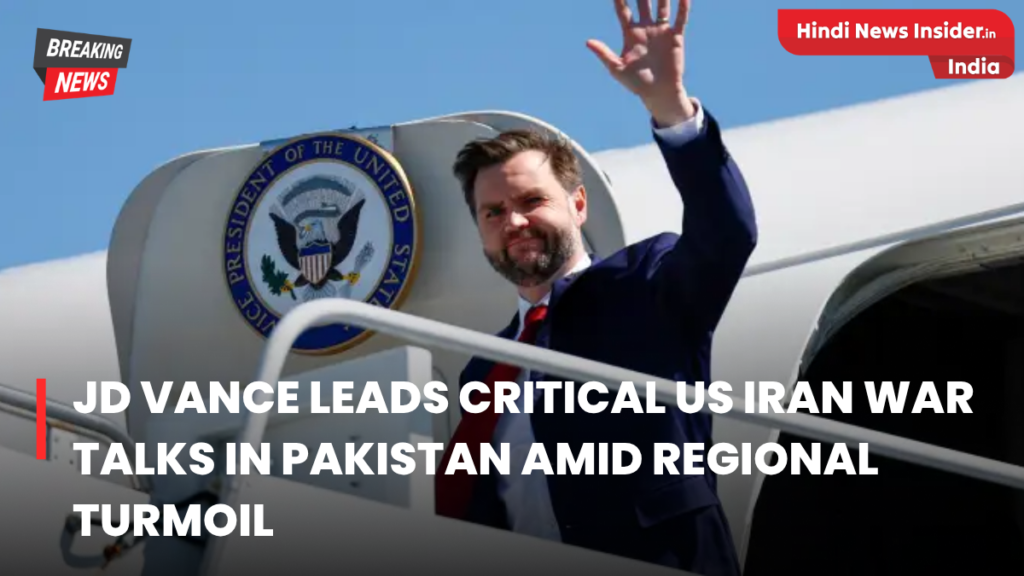
The prospect of de-escalation in the simmering conflict between the United States and Iran hinges precariously on US Iran War Talks scheduled to commence in Islamabad, Pakistan, this weekend. With US Vice President JD Vance expected to lead the American delegation, hopes for a lasting resolution are high, yet the fragile ceasefire brokered earlier this week already shows signs of strain.
Join our social media platform
Regional events, from devastating Israeli strikes in Lebanon to renewed accusations of Iranian aggression by Kuwait and Saudi Arabia, threaten to derail the delicate diplomatic efforts before they even begin. Pakistan, emerging as a crucial mediator, finds itself hosting these high-stakes negotiations amidst a backdrop of profound uncertainty and escalating tensions across the Middle East.
The Precarious State of US Iran War Talks
The very foundation of the upcoming US Iran War Talks seems to be shaking even before the principal delegates have gathered. Initial reports from the Wall Street Journal suggesting the Iranian delegation had already arrived in Pakistan were swiftly and emphatically rejected by multiple prominent Iranian news outlets, including Mehr News Agency, Tasnim, and Fars News. This contradiction sowed immediate doubt about Tehran’s commitment and the logistical readiness for the crucial dialogue.
The ambiguity surrounding the departure of key Iranian figures, such as Foreign Minister Abbas Araghchi and Parliament Speaker Mohammad Bagher Ghalibaf, casts a long shadow over the proceedings, underscoring the deep mistrust and complex internal dynamics at play within the Islamic Republic. The mere act of physically arriving for talks, usually a procedural formality, has become a barometer for the political will required to navigate such an intricate peace process.
Read more: “Crushing Victory”: Iran Declares “DEFEAT” Of Israel & U.S. After Trump Retreat, Truce Announcement\
Tehran’s Hesitation: Doubts Over Delegation’s Departure
The initial optimism surrounding the ceasefire was quickly tempered by reports from Iran’s Tasnim News Agency, citing an anonymous source, that neither Foreign Minister Abbas Araghchi nor Parliament Speaker Mohammad Bagher Ghalibaf had yet departed for Islamabad. This revelation directly contradicted earlier international reports, causing significant confusion and raising questions about Iran’s readiness to engage in direct talks.
The swift refutation by multiple Iranian news outlets underscores a potential internal struggle or a deliberate strategy to project strength and control over the narrative. Such public disavowals prior to major diplomatic engagements are rare and can be interpreted in several ways: a genuine logistical delay, an attempt to gain leverage, or a reflection of internal disagreements within the Iranian leadership regarding the scope and utility of the talks.
Regardless of the underlying reason, this hesitation injects an immediate element of unpredictability into the US Iran War Talks, making the path to any meaningful agreement even more challenging. The international community watches closely, understanding that a strong, unified commitment from both sides is paramount for any successful outcome.
Israel’s Shadow: Lebanese Strikes Threaten Diplomacy
Adding another layer of complexity and palpable tension to the impending US Iran War Talks are Israel’s recent, devastating strikes on neighboring Lebanon. These attacks, which reportedly left around 300 dead and nearly a thousand injured, have sent shockwaves across the region, triggering widespread condemnation and reigniting fears of a broader conflict. For Iran, which maintains significant ties with Hezbollah in Lebanon, these strikes are not merely a regional incident but a direct affront and a potential provocation.
The timing of these attacks, just as a fragile ceasefire between the US and Iran was taking hold and peace talks were being prepared, is particularly problematic. It threatens to erode any goodwill that might have been built and could provide hardliners within Iran with ammunition to argue against diplomatic engagement, framing it as futile in the face of continued aggression against its allies.
The humanitarian crisis unfolding in Lebanon further complicates the diplomatic landscape, making it difficult for Iran to focus solely on its direct engagement with the US without addressing the plight of its regional partners. The shadow of these strikes looms large over Islamabad, threatening to overshadow the primary agenda of the US Iran War Talks and pull the focus back to the immediate, violent realities of the Middle East.
Read also: Historic Breakthrough: World Hails US-Iran Ceasefire, Urges Lasting Peace in the Middle East
Pakistan’s Pivotal Role in Mediating US Iran War Talks
Amidst the swirling uncertainties and escalating regional tensions, Pakistan has emerged as a critical and seemingly impartial mediator in the ongoing US-Iran conflict. Its diplomatic efforts were instrumental in brokering the initial two-week ceasefire that paused the intense fighting which had gripped the Middle East since late February. Now, Islamabad is preparing to host the pivotal US Iran War Talks over the weekend, a testament to its commitment to regional stability and its unique position as a nation with historical ties to both the US and Iran.
The decision to host such a high-profile, sensitive negotiation underscores Pakistan’s growing diplomatic confidence and its aspiration to play a constructive role in resolving complex international disputes. The intricate preparations for the talks, including heightened security measures and the selection of a secure venue, reflect the gravity of the situation and Pakistan’s determination to ensure a conducive environment for dialogue.
Islamabad Prepares for High-Stakes Diplomacy
The capital city of Islamabad is abuzz with activity as Pakistan gears up to host the crucial US Iran War Talks. Security has been significantly beefed up around the designated talks venue, the Serena Hotel, which is located in a high-security zone housing key government buildings and foreign embassies. Al Jazeera reported that the hotel has been requisitioned from Wednesday evening through Sunday, with all regular guests vacated to ensure maximum security and privacy for the delegations.
This level of preparation highlights the immense logistical and security challenges associated with hosting such sensitive negotiations, especially given the volatile regional climate. Pakistan’s government and security agencies are leaving no stone unturned to create a secure and serene environment where meaningful dialogue can take place without external interference or threats. T
he successful hosting of these talks, regardless of their immediate outcome, would mark a significant diplomatic achievement for Pakistan, solidifying its role as a regional peacemaker and a responsible member of the international community. The world watches, hopeful that Islamabad’s efforts will pave the way for a much-needed de-escalation.
Read also: US Politicians React with Caution and Relief to Trump’s Iran Ceasefire
The Diplomatic Dance: Who’s At the Table?
The composition of the delegations for the US Iran War Talks speaks volumes about the significance both Washington and Tehran attach to these negotiations. Leading the formidable US delegation will be Vice President JD Vance, a clear signal of the Trump administration’s commitment and the high-level importance it places on these discussions. Vance will be joined by President Donald Trump’s top envoy, Steve Witkoff, and his son-in-law, Jared Kushner, both known for their close ties to the President and their involvement in previous high-stakes diplomatic initiatives.
This powerful US contingent suggests a clear mandate to seek a substantive resolution. On the Iranian side, the delegation is expected to be led by Foreign Minister Abbas Araghchi and Parliament Speaker Mohammad Bagher Ghalibaf. Araghchi, a seasoned diplomat, brings extensive experience in international negotiations, while Ghalibaf’s presence as a prominent political figure could signify broader support from Iran’s parliamentary and conservative factions.
The seniority and influence of these individuals on both sides underscore the gravity of the situation and the potential for these talks to chart a new course for US-Iran relations, or conversely, to deepen the existing chasm. The success of the US Iran War Talks will largely depend on the ability of these key figures to navigate deeply entrenched positions and find common ground.
Escalating Tensions: Hormuz, Kuwait, and Saudi Arabia Amidst US Iran War Talks
Even as preparations for the US Iran War Talks are underway, the region continues to be plagued by incidents that threaten to ignite wider conflicts and undermine diplomatic efforts. The Strait of Hormuz, a critical global choke point for oil shipments, remains a flashpoint, drawing a stern warning from US President Donald Trump. Simultaneously, new accusations of drone attacks from Kuwait and reports of pipeline damage in Saudi Arabia against Iranian proxies further complicate the already fragile peace process.
These incidents highlight the multifaceted nature of the US-Iran conflict, which extends far beyond direct state-to-state confrontation to involve a complex web of regional actors, proxies, and economic vulnerabilities. Addressing these peripheral, yet highly incendiary, issues will be crucial for the success of the US Iran War Talks and for achieving any semblance of lasting stability in the Middle East.
Trump’s Stern Warning on the Strait of Hormuz
The Strait of Hormuz, a narrow waterway through which approximately 20 percent of the world’s oil supply passes, has long been a flashpoint in US-Iran relations. Amidst reports that Iran might impose tolls on vessels transiting the strait, US President Donald Trump issued a strong and unequivocal warning to Tehran.
In a post on Truth Social, Trump declared, “There are reports that Iran is charging fees to tankers going through the Hormuz Strait — They better not be and, if they are, they better stop now!” This stern admonition underscores the economic and strategic importance of the strait to global trade and energy security. Any attempt by Iran to levy fees or restrict passage would be viewed as a direct challenge to international maritime law and a significant escalation of tensions, potentially leading to a direct confrontation.
The timing of Trump’s warning, just as US Iran War Talks are about to begin, serves as a stark reminder of the non-negotiable red lines for the US and its allies regarding the free flow of commerce through this vital waterway. It adds another layer of pressure on the diplomatic efforts in Islamabad, forcing the issue of economic leverage and maritime security onto an already crowded agenda.
Regional Instability: Accusations from Kuwait and Saudi Arabia
Despite the proclaimed ceasefire between Iran and the US, the broader Middle East continues to experience significant instability, with new accusations of aggression emerging from key regional players. Kuwait, a close US ally, openly accused Iran and its proxies of launching drone attacks targeting its territory on Thursday, as reported by the Associated Press. Such an accusation, if substantiated, would represent a direct violation of the spirit of de-escalation and a significant challenge to the ongoing peace efforts.
Simultaneously, Saudi Arabia’s state-run Saudi Press Agency cited an anonymous official confirming that a crucial East-West pipeline, designed to carry oil out to the Red Sea and bypass the Strait of Hormuz, was damaged in recent attacks. While the official did not directly attribute responsibility, the implication points towards actors aligned with Iran. These incidents, occurring concurrently with the lead-up to the US Iran War Talks, highlight the deep-seated regional rivalries and the pervasive influence of proxy warfare that characterize the US-Iran conflict.
They demonstrate that even if direct US-Iran hostilities are paused, the broader ecosystem of conflict continues to simmer, threatening to undermine any progress made at the negotiating table. The delegates in Islamabad will undoubtedly have these fresh accusations of regional destabilization weighing heavily on their discussions.
Historical Context and the Road Ahead for US Iran War Talks
The upcoming US Iran War Talks in Pakistan are not occurring in a vacuum but are the latest chapter in a long and often contentious relationship between Washington and Tehran. The current round of intense fighting, which erupted on February 28th and persisted for two weeks, served as a stark reminder of the volatile nature of this rivalry.
The brokered two-week pause, while a welcome respite, has proven to be incredibly fragile, challenged by both direct and indirect actions across the region. As the delegations gather, they face the daunting task of not only de-escalating the immediate crisis but also laying the groundwork for a more stable future.
The historical baggage, coupled with the immediate geopolitical challenges, makes these US Iran War Talks exceptionally complex, requiring astute diplomacy, genuine commitment, and a willingness from all parties to make difficult concessions for the sake of regional and global peace.
A Brief Respite: The Two-Week Ceasefire
The period leading up to the imminent US Iran War Talks was marked by a two-week pause in the intense fighting that had flared between the two sides across the Middle East since February 28. This temporary truce, meticulously brokered by Pakistan, offered a much-needed respite from what had rapidly escalated into a dangerous cycle of attacks and counter-attacks.
For two weeks, the region held its breath, witnessing a virtual halt in direct hostilities, a testament to the effectiveness of Pakistan’s mediation efforts. However, this respite was always understood to be on shaky ground. It was a pause, not a resolution, and its fragility has been underscored by the recent developments: the uncertainty surrounding the Iranian delegation’s departure, the devastating Israeli strikes in Lebanon, Trump’s warning on Hormuz, and the accusations from Kuwait and Saudi Arabia.
This brief cessation of hostilities provided the window for diplomatic engagement, but it also revealed how deeply entrenched the conflict is and how easily it can be reignited. The US Iran War Talks must now capitalize on this fragile window to prevent a return to full-scale conflict, understanding that the patience for such temporary pauses is wearing thin.
The Stakes of Dialogue: Navigating Complex Geopolitics
The stakes for the US Iran War Talks are astronomically high, not just for the two principal adversaries but for the entire Middle East and, indeed, the global community. The discussions in Islamabad represent a critical juncture where the path towards de-escalation or further confrontation will be largely determined. Navigating the complex geopolitics will require addressing a myriad of issues: Iran’s nuclear program, its regional proxy networks, the future of the Strait of Hormuz, sanctions relief, and the broader security architecture of the Gulf.
For the US, the goal will likely be to curb Iranian influence, secure maritime routes, and prevent nuclear proliferation. For Iran, the focus will be on sanctions relief, recognition of its regional role, and security guarantees. The challenge lies in finding areas of common interest amidst deep ideological divides and historical grievances.
The success of these US Iran War Talks is crucial for preventing a wider conflagration that could destabilize global energy markets, trigger humanitarian crises, and draw in additional international actors. The world watches with bated breath, hoping that diplomacy can triumph over the forces of conflict and usher in an era of genuine, albeit challenging, peace.
In conclusion, the upcoming US Iran War Talks in Islamabad represent a pivotal moment in one of the world’s most enduring and dangerous geopolitical rivalries. With JD Vance leading the US delegation and senior Iranian officials expected, the stage is set for high-stakes diplomacy facilitated by Pakistan.
However, the path to peace is fraught with peril. The uncertain status of the Iranian delegation, the devastating impact of Israeli strikes in Lebanon, and renewed regional accusations against Iran all underscore the extreme fragility of the current ceasefire. President Trump’s stern warning regarding the Strait of Hormuz further highlights the economic flashpoints that could quickly unravel any diplomatic progress.
As the world watches, the success of these US Iran War Talks will hinge on the willingness of both Washington and Tehran to overcome deep-seated mistrust, address complex regional dynamics, and commit to a sustained de-escalation. The hope is that through dialogue, a path towards a more stable and secure future for the Middle East can finally emerge from the current climate of intense regional turmoil.
Read More
- NDTV India is Hindi News Website. Read Hindi News, Latest Hindi News, Today Hindi News, Breaking Hindi News, Hindi Samachar
- Today’s news: Get latest and Breaking News on Politics, Business, Lifestyle, Entertainment and Sports along with News updates from around the world.
- Read the Latest News Updates online related to India, World and US business and economy.
- Times of India: News – Breaking News, Latest News, India.
- ભારતની તમામ નવી સરકારી યોજનાઓ 2026 વિશે માહિતી