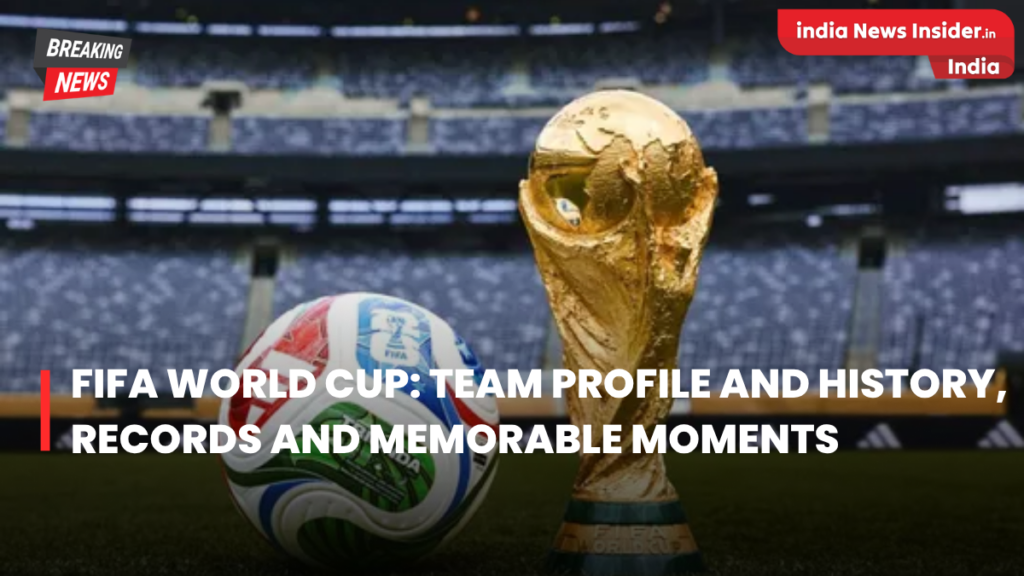
The FIFA World Cup, often referred to simply as the World Cup, is the pinnacle of international association football. This competition brings together the senior men’s national teams of member associations of the Fédération Internationale de Football Association (FIFA), the sport’s global governing body. Held every four years since its inception in 1930, with breaks only for World War II in 1942 and 1946, it stands as the most prestigious and widely followed sporting event globally. Argentina are the reigning champions, having secured their third title in 2022 by defeating France.
The tournament begins with a qualification phase spanning three years, which determines the teams advancing to the final competition. In the tournament phase, 32 teams traditionally compete for the coveted title over approximately one month in the host nation(s). Host nations automatically qualify. Looking ahead, the competition is set to expand to 48 teams, starting from the 2026 FIFA World Cup.
As of the 2022 FIFA World Cup, 22 final tournaments have been held, featuring 80 national teams. The trophy has been claimed by eight different national teams. Brazil holds the record for most wins with five titles and is the only team to have participated in every tournament. Other champions include Germany and Italy (four titles each), Argentina (three titles), France and inaugural winner Uruguay (two titles each), and England and Spain (one title each).
The World Cup’s immense popularity is undeniable. The 2018 FIFA World Cup garnered an estimated viewership of 3.57 billion, nearly half the global population, while the 2022 event saw engagement reach 5 billion, with 1.5 billion tuning in for the final match.
Eighteen countries have had the honour of hosting the World Cup, with Qatar most recently hosting in 2022. The 2026 tournament will be a joint effort by Canada, Mexico, and the United States, making Mexico the first country to host games in three FIFA World Cups.
History
Early International Competitions
The genesis of international football can be traced back to the first match between Scotland and England in Glasgow in 1872. The inaugural international tournament for nations, the British Home Championship, followed in 1884. As football’s popularity spread, it featured as a demonstration sport at the 1900 and 1904 Summer Olympics, later retroactively upgraded to official status by the International Olympic Committee. FIFA, founded in 1904, made an unsuccessful attempt to organize its own international tournament outside the Olympic framework in 1906.
Football became an official Olympic sport at the 1908 London Summer Olympics, organized by England’s Football Association (FA) for amateur players. Great Britain, represented by the England national amateur team, won gold, a feat they repeated in 1912.
Sir Thomas Lipton organized the Sir Thomas Lipton Trophy in Turin in 1909, sometimes referred to as “The First World Cup.” This competition featured professional clubs representing nations, with West Auckland, an amateur English side, winning the trophy twice. Prior to this, from 1876 to 1904, “football world championships” were informal matches between leading English and Scottish clubs.
In 1914, FIFA recognized the Olympic tournament as a “world football championship for amateurs” and assumed responsibility for its management. This led to the first intercontinental football competition at the 1920 Summer Olympics, won by Belgium. Uruguay claimed the next two Olympic football tournaments in 1924 and 1928, marking the start of FIFA’s professional era and contributing to Uruguay’s four stars on their badge.
Birth of the FIFA World Cup
Inspired by the success of the Olympic football tournaments, FIFA President Jules Rimet championed the idea of an independent international tournament. On 28 May 1928, the FIFA Congress in Amsterdam formally decided to stage a world championship. Uruguay, two-time Olympic football champions and celebrating their centenary of independence, was selected as the host nation for the inaugural World Cup in 1930.
However, the choice of Uruguay presented significant challenges, particularly the long and expensive transatlantic journey for European teams amidst the Great Depression. European participation was initially scarce, but Rimet’s persistence eventually convinced Belgium, France, Romania, and Yugoslavia to make the trip. In total, 13 nations competed: seven from South America, four from Europe, and two from North America.
The first two FIFA World Cup matches were played simultaneously on 13 July 1930, with France defeating Mexico 4–1 and the United States beating Belgium 3–0. Lucien Laurent of France scored the first goal in World Cup history. The final saw Uruguay triumph over Argentina 4–2 in front of 93,000 spectators in Montevideo, becoming the first FIFA World Cup champions. The creation of the World Cup led to a disagreement between FIFA and the IOC over amateur player status, resulting in football being dropped from the 1932 Summer Olympics. Olympic football returned in 1936 but was by then overshadowed by the more prestigious World Cup.
World Cups Before World War II
The early World Cups faced hurdles like difficult intercontinental travel and the looming threat of war. Few South American teams traveled to Europe for the 1934 FIFA World Cup, and most North and South American nations boycotted the 1938 tournament, with Brazil being the only South American participant in both. The 1942 and 1946 competitions, despite bids from Germany and Brazil, were canceled due to the Second World War.
Read also: Atlético de Madrid vs Barcelona: Champions League Quarter-Final Second Leg Preview
Post-War Era and Expansion
The 1950 FIFA World Cup in Brazil marked a significant return, including British football associations (England, Scotland, Wales, and Northern Ireland) who had rejoined FIFA in 1946 after withdrawing in 1920. The tournament also saw the return of 1930 champions Uruguay, who had boycotted the previous two events. Uruguay famously defeated host nation Brazil in the final, an event known as “Maracanazo.”
Between 1934 and 1978, 16 teams participated in each tournament, with minor exceptions. Most participants were from Europe and South America, with teams from other continents often struggling against them. Before 1982, only the United States (1930), Cuba (1938), North Korea (1966), and Mexico (1970) from outside Europe and South America managed to advance beyond the first round.
Expansion to 24 and 32 Teams
To foster greater global participation, the tournament expanded to 24 teams in 1982 and then to 32 teams in 1998. These expansions allowed more teams from Africa, Asia, and North America to compete, leading to increased success for these regions. Notable achievements include Mexico (quarter-finals 1986), Cameroon (quarter-finals 1990), South Korea (fourth place 2002), Senegal (quarter-finals 2002), USA (quarter-finals 2002), Ghana (quarter-finals 2010), Costa Rica (quarter-finals 2014), and Morocco (fourth place 2022). Despite this, European and South American teams continue to dominate, having contested all FIFA World Cup finals to date.
Qualification rounds also saw growing participation, with a record 204 countries attempting to qualify for the 2010 FIFA World Cup.
Expansion to 48 Teams
The idea of further expansion gained traction in the 2010s. In 2013, Sepp Blatter advocated for greater representation for African and Asian national associations. Michel Platini, a potential FIFA Presidential candidate, proposed expanding to 40 teams, arguing it would globalize the competition and aid development. In October 2016, FIFA President Gianni Infantino supported a 48-team FIFA World Cup, which FIFA officially confirmed for the 2026 edition on 10 January 2017.
2015 FIFA Corruption Case
By May 2015, FIFA was embroiled in a major corruption scandal. Allegations and criminal charges of bribery, fraud, and money laundering emerged, particularly concerning media and marketing rights for FIFA games. FIFA officials were accused of accepting over $150 million in bribes over 24 years. The U.S. Department of Justice announced a 47-count indictment, leading to numerous arrests. Then-President Sepp Blatter announced his resignation for February 2016.
Further revelations included Chuck Blazer admitting to taking bribes for the 1998 and 2010 FIFA World Cups. Swiss authorities seized data from Blatter’s office, and FIFA postponed the bidding process for the 2026 FIFA World Cup. Blatter and FIFA VP Michel Platini were suspended, maintaining their innocence. More arrests and indictments followed in December 2015, highlighting the systemic corruption within the organization.
Biennial FIFA World Cup Proposition
In May 2021, the Saudi Arabian Football Federation proposed a biennial FIFA World Cup, a plan backed by Arsène Wenger and federations in Africa and Asia. While continental confederations like UEFA and CONMEBOL opposed it, the idea reportedly had the support of 166 out of 210 FIFA member associations.
Read also: Real Madrid’s La Liga Hopes Falter After Disappointing Girona Draw
Other FIFA Tournaments
Beyond the men’s World Cup, FIFA organizes a range of other international competitions.
- FIFA Women’s FIFA World Cup: An equivalent tournament for women’s football, first held in China in 1991. While smaller, it is rapidly growing in scale and profile.
- Olympic Football: Men’s football has been part of nearly every Summer Olympic Games. However, since 1992, it has been an under-23 tournament with limited over-age players, making it distinct from the top-level FIFA World Cup. Women’s football debuted at the Olympics in 1996.
- FIFA Confederations Cup: Previously held one year before the World Cup in the host nation(s) as a dress rehearsal, featuring continental champions, the FIFA World Cup champion, and the host. It ran from 1992 to 2017 but was discontinued in 2019 due to the expansion of the FIFA Club World Cup.
- Youth Tournaments: FIFA organizes FIFA World Cups for various age groups, including the FIFA U-20 World Cup, FIFA U-17 World Cup, FIFA U-20 Women’s World Cup, and FIFA U-17 Women’s FIFA World Cup.
- Club Football: The FIFA Club World Cup and the upcoming FIFA Women’s Club FIFA World Cup (starting 2028), along with the FIFA Intercontinental Cup and FIFA Women’s Champions Cup.
- Football Variants: Tournaments for futsal (FIFA Futsal World Cup, FIFA Futsal Women’sFIFA World Cup) and beach soccer (FIFA Beach Soccer World Cup).
The Trophy
Jules Rimet Trophy
From 1930 to 1970, the FIFA World Cup winning team was awarded the Jules Rimet Trophy. Initially called the World Cup or Coupe du Monde, it was renamed in 1946 in honour of FIFA President Jules Rimet, who spearheaded the tournament’s creation. After Brazil’s third victory in 1970, they were allowed to keep the trophy permanently. However, it was stolen in 1983 and has never been recovered, believed to have been melted down.
FIFA World Cup Trophy
Following 1970, a new trophy, known as the FIFA World Cup Trophy, was designed. Out of 53 models, the work of Italian designer Silvio Gazzaniga was chosen. This solid 18-carat gold trophy stands 36 cm (14.2 in) tall and weighs 6.175 kg (13.6 lb). Its base features two layers of semi-precious malachite, and the bottom side is engraved with the year and name of each winner since 1974. Gazzaniga described it as “The lines spring out from the base, rising in spirals, stretching out to receive the world. From the remarkable dynamic tensions of the compact body of the sculpture rise the figures of two athletes at the stirring moment of victory.”
Unlike its predecessor, the new trophy is not awarded permanently. Winning nations retain the solid gold original only for post-match celebrations, receiving a gold-plated replica to keep.
Medals and Badges
Members (players, coaches, and managers) of the top three teams receive medals: gold for winners, silver for runners-up, and bronze for third place. Fourth-place medals were awarded to South Korea in 2002. Before 1978, medals were only given to the eleven players on the pitch during the final and third-place match. In 2007, FIFA retroactively awarded winners’ medals to all squad members of FIFA World Cup-winning teams between 1930 and 1974.
Since 2006, FIFA World Cup winners also earn the right to wear the FIFA Champions Badge on their jerseys until the next champion is crowned.
Format
Qualification
Since the 1934 FIFA World Cup, qualifying tournaments have been held to narrow the field for the final competition. These are organized within FIFA’s six continental zones (Africa, Asia, North and Central America and Caribbean, South America, Oceania, and Europe) by their respective confederations. FIFA pre-determines the number of spots allocated to each zone, typically based on the strength of their teams.
The qualification process can last up to three years. Formats vary between confederations, and intercontinental play-offs often decide additional spots. Since the 1938 FIFA World Cup, host nations automatically qualify. The defending champions also enjoyed automatic qualification from 1938 to 2002, but this rule was abolished from 2006 onwards, requiring them to qualify. Brazil, 2002 champions, were the first defending champions to go through qualification.
Final Tournament
The final tournament format since 1998 has involved 32 national teams competing over a month, divided into two stages: the group stage and the knockout stage.
In the group stage, teams are placed into eight groups of four. Eight teams, including the hosts, are seeded based on FIFA World Rankings or past FIFA World Cup performance, ensuring they are in separate groups. Other teams are allocated to “pots,” often geographically, and drawn randomly, with constraints to prevent more than two European teams or more than one team from other confederations per group. Each group plays a round-robin format, with each team playing three matches. The final round of matches is played simultaneously for fairness. Three points are awarded for a win, one for a draw, and none for a loss (since 1994). The top two teams from each group advance. Tie-breaking criteria include goal difference, goals scored, head-to-head records, and fair play points, with a drawing of lots as a final resort.
The knockout stage is a single-elimination tournament. It begins with the round of 16, where group winners play against runners-up from other groups. This is followed by quarter-finals, semi-finals, a third-place match, and the final. Extra time and penalty shootouts are used to determine winners if matches are tied.
A new 48-team format, approved on 10 January 2017, will be implemented for the 2026 World Cup. Initially planned as 16 groups of three, it was revised on 14 March 2023, to feature 12 groups of four teams. The top two teams from each group, along with the eight best third-placed teams, will advance to a new round of 32. In March 2025, FIFA was reportedly considering a one-off expansion to 64 teams for the 2030 World Cup, marking its centennial.
Hosts
Selection Process
Early World Cup hosts were chosen at FIFA Congress meetings. The significant travel required between South America and Europe caused controversy and boycotts, such as for the 1930 and 1938 tournaments. To mitigate these issues, FIFA adopted a pattern of alternating hosts between the Americas and Europe from 1958 to 1998. The 2002 World Cup, jointly hosted by South Korea and Japan, was the first in Asia and the first with multiple hosts. South Africa became the first African host in 2010.
Today, the host country is chosen by a vote of FIFA’s Council using an exhaustive ballot system. National associations submit bids, undergo inspections by a FIFA group, and a report is produced. Decisions are typically made six or seven years in advance, sometimes for multiple tournaments simultaneously, as with the 2018 (Russia) and 2022 (Qatar, the first Middle Eastern host) World Cups.
From 2010 to 2014, a policy of continental rotation was in place, limiting bids to countries from specific confederations (Africa in 2010, South America in 2014). This policy was discontinued after 2014 to avoid scenarios like Brazil being the sole bidder for 2014. Now, any country can bid, except those whose confederations hosted the two preceding tournaments. The 2026 FIFA World Cup, hosted by the United States, Canada, and Mexico, will be the first with three host nations and the largest ever, with 48 teams playing 104 matches. The US will host 60 matches, including all from the quarter-finals onwards, while Canada and Mexico will host 10 each.
Summary by Confederation
| Confederation | Times Hosted | Hosts |
|---|---|---|
| UEFA (Europe) | 11 | 1934, Italy; 1938, France; 1954, Switzerland; 1958, Sweden; 1966, England; 1974, West Germany; 1982, Spain; 1990, Italy; 1998, France; 2006, Germany; 2018, Russia |
| CONMEBOL (South America) | 5 | 1930, Uruguay; 1950, Brazil; 1962, Chile; 1978, Argentina; 2014, Brazil |
| CONCACAF (North and Central America and Caribbean) | 3 | 1970, Mexico; 1986, Mexico; 1994, United States |
| AFC (Asia) | 2 | 2002, South Korea & Japan; 2022, Qatar |
| CAF (Africa) | 1 | 2010, South Africa |
| OFC (Oceania) | 0 | none |
| OFC (Oceania) | 0 | none |
Performances
Six of the eight World Cup champions have won at least one title on home soil. Brazil, however, lost the deciding match at home in 1950 and their semi-final in 2014, while Spain only reached the second round when hosting in 1982. England (1966) secured their sole title as hosts. Uruguay (1930), Italy (1934), Argentina (1978), and France (1998) won their first titles at home before adding more. Germany (1974) won their second title as hosts.
Other host nations have also achieved their best results when hosting, including Switzerland (quarter-finals 1954), Sweden (runners-up 1958), Chile (third place 1962), South Korea (fourth place 2002), Russia (quarter-finals 2018), and Mexico (quarter-finals in 1970 and 1986). Only South Africa (2010) and Qatar (2022) have failed to advance beyond the first round as hosts.
Broadcasting and Promotion
First televised in 1954, the World Cup is now the most widely viewed and followed sporting event globally. The 2006 World Cup’s cumulative viewership was an estimated 26.29 billion, with 715.1 million watching the final. The draw for the 2006 tournament alone attracted 300 million viewers.
The World Cup draws major sponsors like Coca-Cola, McDonald’s, and Adidas, significantly boosting their global brands. Host countries typically see multi-million dollar revenue increases. FIFA generated $4.8 billion from the 2014 tournament and $6.1 billion from the 2018 tournament.
Each World Cup since 1966 has its own mascot or logo, with World Cup Willie being the first in 1966. Official match balls, manufactured by Adidas since 1970, are specially designed for each tournament. Official songs, performed by artists from Shakira to Will Smith, and other iconic music like “Nessun dorma” have become synonymous with the event.
Panini published its first sticker album for the 1970 World Cup, and collecting/trading stickers has since become a cherished part of the World Cup experience. FIFA has also licensed World Cup video games, primarily sponsored by Electronic Arts, since 1986.