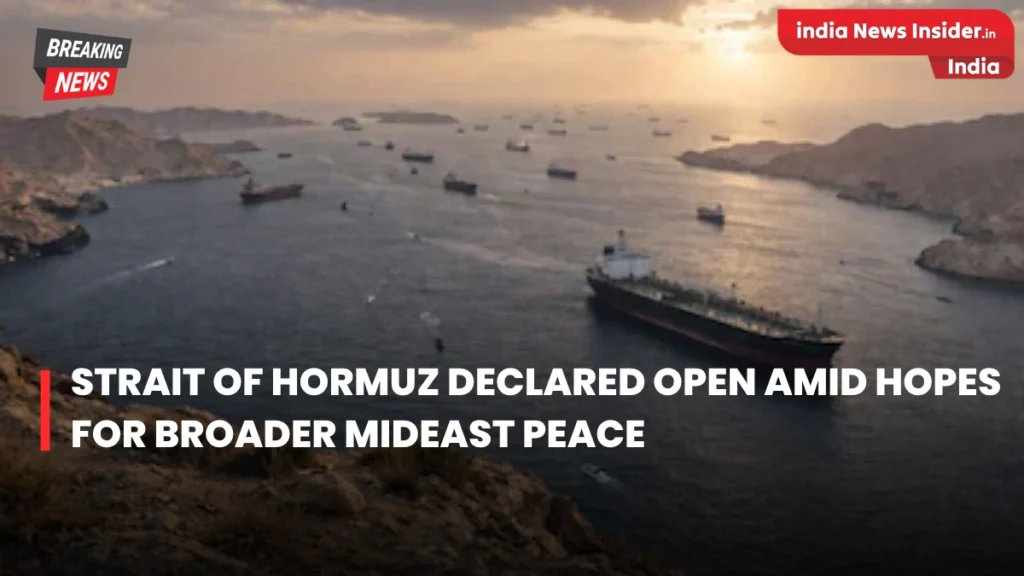
In a significant development signaling potential de-escalation in the Middle East, Iran has announced that the Strait of Hormuz is now “completely open” for all commercial vessels for the duration of the ongoing ceasefire between Lebanon and Israel. This declaration comes as US President Donald Trump expresses optimism about the impending end to the war with Iran and a potential nuclear deal.
Join our social media platform
Strait of Hormuz Reopens for Commercial Traffic
Iranian foreign minister Seyed Abbas Araghchi confirmed the move on Friday, stating on X, “In line with the ceasefire in Lebanon, the passage for all commercial vessels through Strait of Hormuz is declared completely open for the remaining period of ceasefire.” This strategic waterway, crucial for global oil shipments, has been a flashpoint throughout the recent conflict, and its reopening is a critical step towards stabilizing regional commerce and reducing tensions. The move suggests a willingness from Tehran to facilitate trade during this period of reduced hostilities.
Read also: Marco Rubio, Yvette Cooper Discuss Iran Ceasefire Strait of Hormuz Security
Broader Peace Efforts and Trump’s Optimism
Amidst these developments, US President Donald Trump has voiced considerable optimism regarding the cessation of the conflict with Iran and the prospects of a lasting peace deal.
US-Iran War Nearing End?
Speaking at an event in Las Vegas, Trump described Iran as a “tough, smart country” but asserted that its military capacity had been “severely reduced.” He claimed, “they (Iran) have no Navy left. 158 ships at the bottom of the sea. 158, think of it.” Trump stated that the war in Iran is going “swimmingly” and “should be ending pretty soon,” hinting at a possible end to the conflict that began on February 28 with a US-Israeli attack.
Read also: ‘Vengeance for all’: How Iran’s Lego videos won narrative war against Trump
Nuclear Ambitions and Deal Prospects
Anticipation is high for the next round of talks between Washington and Tehran, with Trump indicating a meeting might occur over the weekend. He mentioned that Iran had offered not to possess nuclear weapons for more than 20 years, though Tehran’s nuclear ambitions remained a sticking point at previous talks in Islamabad. Reports suggested the US proposed a 20-year pause to Iran’s nuclear program, while Iran counter-proposed a five-year pause. Despite these differences, Trump told reporters, “I think we’re very close to making a deal with Iran.”
Possible Pakistan Visit
Adding to the optimism, President Trump hinted at a possible visit to Pakistan to finalize a peace deal with Iran. Praising Pakistan, he told a reporter, “I would. I would go to Pakistan, yeah. Pakistan has been great. They’ve been so good. Islamabad, I’ll be—I might go. Yeah. If the deal is signed in Islamabad, I might go.” This prospect underscores Pakistan’s potential role in mediating a broader regional peace.
Fragile Ceasefire Between Lebanon and Israel
The Iranian announcement regarding the Strait of Hormuz coincides with a 10-day ceasefire between Lebanon and Israel, which went into effect on Thursday. This truce followed last week’s strikes on Lebanon, which caused massive loss of lives and widespread destruction, and threatened the fragile understanding between Iran and the US.
Celebratory gunfire and rocket explosions were reported across Beirut as the ceasefire began. However, the pause in hostilities remains fragile. The Lebanese Army reported early on Friday that Israel committed violations, including intermittent shelling of southern Lebanese villages. Israel’s defence minister stated that Hezbollah would be disarmed from south of the Litani River either politically or militarily after the ceasefire ends. The Israeli military, through spokesperson Avichay Adraee, confirmed its forces remained deployed in response to continued Hezbollah militant activity.
Strategic Implications and Future Outlook
The reopening of the Strait of Hormuz for commercial traffic is a crucial step towards de-escalation and could alleviate the surge in oil prices that has plagued the global economy since the conflict began. If the Lebanon ceasefire paves the way for a broader peace deal with Iran, it would mark a significant foreign policy win for the Trump administration, which has sought to secure regional stability, reopen the strategically important Strait of Hormuz, and address Iran’s nuclear ambitions. However, the fragility of the ceasefire and outstanding issues, particularly regarding Hezbollah and Iran’s nuclear program, highlight the challenges that remain on the path to lasting peace.
Read More
- NDTV India is Hindi News Website. Read Hindi News, Latest Hindi News, Today Hindi News, Breaking Hindi News, Hindi Samachar
- Today’s news: Get latest and Breaking News on Politics, Business, Lifestyle, Entertainment and Sports along with News updates from around the world.
- Read the Latest News Updates online related to India, World and US business and economy.
- Times of India: News – Breaking News, Latest News, India.
- ભારતની તમામ નવી સરકારી યોજનાઓ 2026 વિશે માહિતી