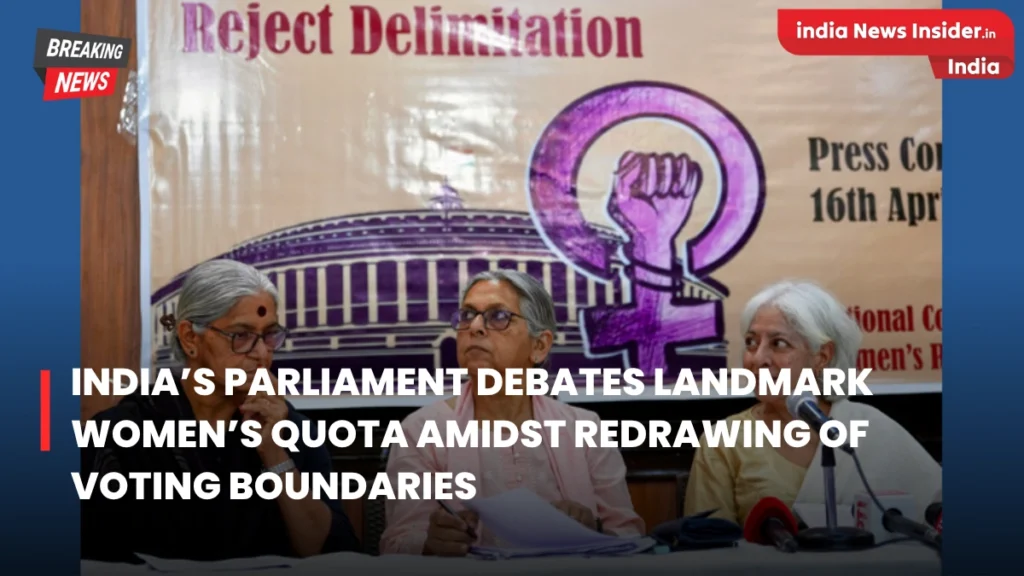
India’s Parliament has commenced a critical debate on a landmark bill aimed at reserving one-third of legislative seats for women. While poised to be one of the most significant shifts in political representation since the nation’s independence, the proposed quota is intrinsically linked to a controversial redrawing of voting boundaries, a move that could ignite political tensions across the country and reshape the future of India’s Parliament.
Join our social media platform
The bill, currently under consideration during a special three-day parliamentary session, seeks to fast-track a 2023 law mandating a 33% reservation for women in both India’s Parliament and state legislatures. If passed, it promises to significantly widen female participation in a political system where women remain vastly underrepresented, currently holding only about 14% of seats in the lower house of India’s Parliament.
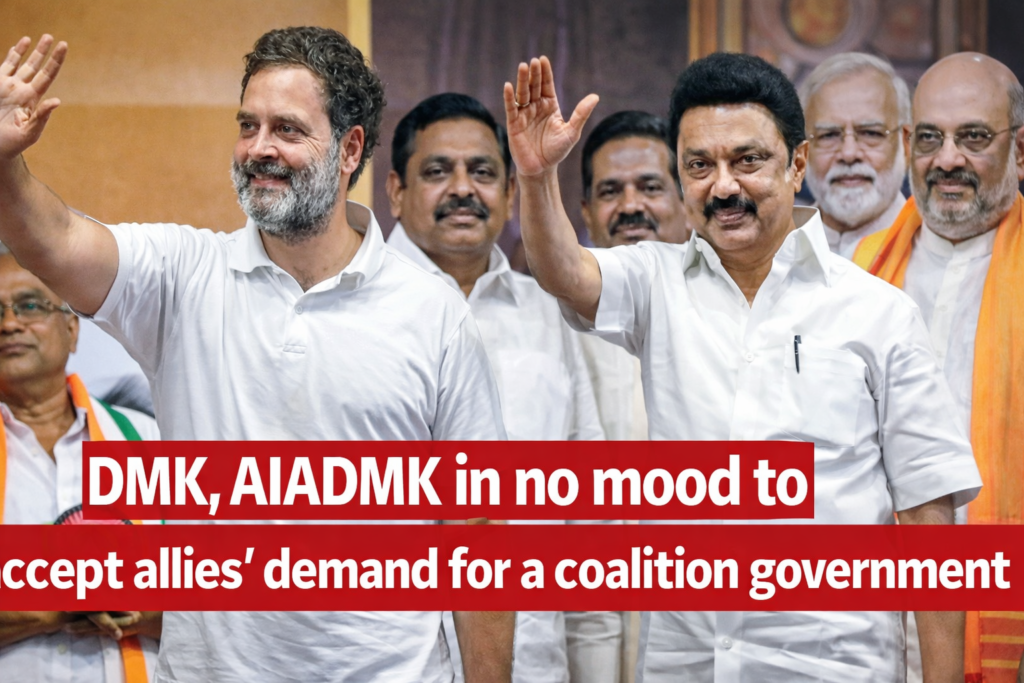
Read also: DMK, AIADMK in no mood to accept allies’ demand for a coalition government
Boosting Female Representation in India’s Parliament
The proposed quota has garnered broad bipartisan support, signaling a collective desire to close the gender gap in legislative bodies. Similar quotas are already in place in several neighboring Asian countries like Nepal and Bangladesh, and India itself mandates one-third reservation for women in local governance. This new legislation could bring hundreds more women into legislative politics, potentially redirecting policy attention towards crucial issues such as women’s health, education, and gender-based violence.
Women’s rights advocate Ranjana Kumari hailed the move as a step towards making India’s “democracy truly representative,” asserting it would compel political parties to field more female candidates. “The door is little open. Women will enter and fill the room slowly,” Kumari commented. For young Indian women like 23-year-old law graduate Pranita Gupta, the change carries immense symbolic weight, instilling “a sense of confidence that we can participate in politics and we can be part of Parliament not only as an exception but as well as a norm.”
Read also: High-Stakes US-Iran Peace Talks Kick Off in Islamabad Amidst Trump’s Warnings and Ceasefire Efforts
The Controversial Delimitation Exercise
The implementation of the women’s quota is, however, tied to a population-based redrawing of voting boundaries, or delimitation, using data from the 2011 census. This process could dramatically increase the number of seats in the lower house of India’s Parliament from 543 to an estimated 850. While the timeline for this exercise remains unclear, it has already triggered intense political debate.
Opposition parties have voiced significant concerns, warning that basing constituencies on population could shift political power towards the faster-growing northern states. This, they argue, would diminish the parliamentary representation, seat share, and overall influence of southern regions, which have successfully slowed population growth and built stronger economies. Critics also contend that such a redrawing could disproportionately benefit Prime Minister Narendra Modi’s Bharatiya Janata Party (BJP), which enjoys strong support in the northern states.
India’s Constitution mandates that parliamentary seats be allocated by population and revised after each census. However, boundaries have not been redrawn since the 1971 census, as successive governments previously delayed the process over concerns about uneven population growth and its impact on regional representation in India’s Parliament.
Mounting Political Tensions
The opposition has not shied away from expressing its apprehension. Tamil Nadu Chief Minister M.K. Stalin publicly burned a copy of the bill and raised a black flag in protest, urging others across his state to follow suit. Some leaders from southern states even arrived at Parliament dressed in black as a mark of protest.
India’s opposition leader Rahul Gandhi alleged that the delimitation exercise could be used to “gerrymander” parliamentary constituencies in favor of Modi’s party ahead of the 2029 national elections. He emphasized the need for a transparent policy framework, developed after wide consultations and consensus, for any delimitation process.
Modi’s BJP has pushed back against these criticisms, with Parliamentary Affairs Minister Kiren Rijiju describing the concerns as misleading. For the bill to pass, it will require a two-thirds majority in both houses of India’s Parliament, meaning the ruling National Democratic Alliance, which currently holds 293 seats, would need to secure 360 votes.
As the debate unfolds, the nation watches closely to see how India’s Parliament navigates this complex legislative challenge, balancing the imperative of gender equality with the potential for significant political realignments.
Read More
- NDTV India is Hindi News Website. Read Hindi News, Latest Hindi News, Today Hindi News, Breaking Hindi News, Hindi Samachar
- Today’s news: Get latest and Breaking News on Politics, Business, Lifestyle, Entertainment and Sports along with News updates from around the world.
- Read the Latest News Updates online related to India, World and US business and economy.
- Times of India: News – Breaking News, Latest News, India.
- ભારતની તમામ નવી સરકારી યોજનાઓ 2026 વિશે માહિતી