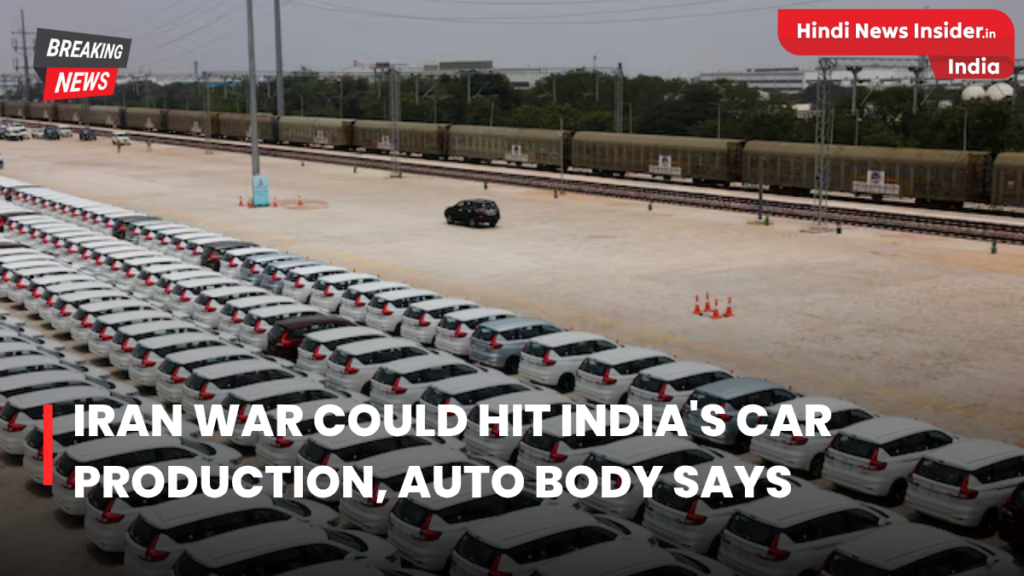
April 14 (Reuters) – India’s auto industry body on Tuesday flagged concerns on the possible adverse impact of the Middle East war on automotive production, input and fuel prices, and freight rates.
Join our social media platform
Concerns Over West Asia Conflict
Shailesh Chandra, president of the Society of Indian Automobile Manufacturers (SIAM), stated that the West Asia conflict is expected to pose short-term challenges for the auto industry. The industry body highlighted that uncertainties arising from the West Asia conflict, particularly prices of crude oil and commodities, higher exchange rates, and disruptions in shipping routes, remain a significant concern for the auto sector.
Export Volumes and Supply Chain Diversification
Analysts at Antique Stock Broking noted that in the near term, the ongoing conflict may weigh on export volumes. They emphasized that the evolving situation reinforces the need for calibrated supply chains and diversification of energy inputs to mitigate potential risks.
Read also: Unlocking Clarity: How SEBI New Mutual Fund Rules Positively Impact Your Investment Portfolio
Domestic Market Dynamics
Entry-Level Segment Challenges
In the entry-level segment, buyer enquiries have remained strong in April so far, according to SIAM president Shailesh Chandra. However, he observed that converting these enquiries into actual sales is taking longer than usual.
Overall Car Sales Growth
Car sales by manufacturers to dealers in India, the world’s third-largest car market, rose 7.9% to 4.6 million units in the financial year 2026, industry data showed. This marks an improvement compared to the previous fiscal year’s 2% growth, largely attributed to improved consumer sentiment bolstered by tax cuts.
Tax Cuts Boosting Demand
In September 2025, India implemented significant tax reductions. Taxes on larger SUVs were slashed to 40% as an additional levy was dropped, while taxes on small cars and two-wheelers were reduced to 18% from 28%. These measures helped support demand across various segments of the market.
Two-Wheeler Sales Performance
Total domestic two-wheeler sales in the financial year 2026 rose 10.7% on-year, according to industry data. This indicates an acceleration from the 9.1% growth recorded in the previous financial year.
Read More
- NDTV India is Hindi News Website. Read Hindi News, Latest Hindi News, Today Hindi News, Breaking Hindi News, Hindi Samachar
- Today’s news: Get latest and Breaking News on Politics, Business, Lifestyle, Entertainment and Sports along with News updates from around the world.
- Read the Latest News Updates online related to India, World and US business and economy.
- Times of India: News – Breaking News, Latest News, India.
- ભારતની તમામ નવી સરકારી યોજનાઓ 2026 વિશે માહિતી